



Why Scientists, Scholars, and Experts Are Not—and Cannot Be—Neutral Authorities

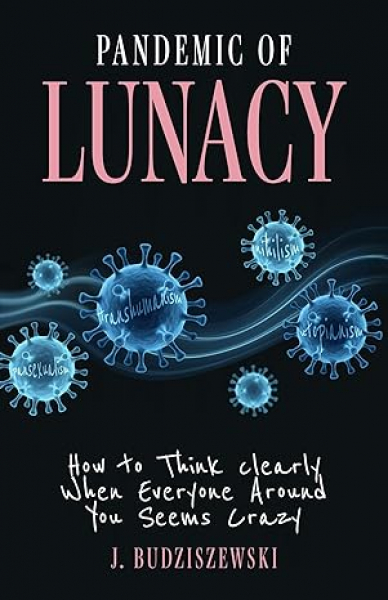
Excerpted from Pandemic of Lunacy: How to Think Clearly When Everyone Around You Seems Crazy (Creed & Culture), published on February 3, 2026.
+++++
“Through the aid of applied science we shall rise from partisanship into patriotism.” — David Starr Jordan, The Call of the Nation (1910)
In 1927, Julian Benda published a book provocatively titled The Treason of the Intellectuals, arguing that although in former days, most of the intellectual class stood apart from political passions, today they plunge into them, scorning the attitude of critical suspension from rivalries.
Benda may not have been right that intellectuals were less tainted by political passions formerly than in modern times. Counterexamples abound. Consider Vergil, who wrote the Aeneid to justify the Roman empire’s glorious destiny to rule forever.
My own argument is more modest. It is possible, however difficult, for an intellectual to be objective. This claim is psychological. It is impossible, though, for an intellectual to be neutral. This claim is not psychological, but logical. The concept of making judgments without any biases or assumptions makes no more sense than the concept of a tightly packed vacuum. Even to side with objectivity against blind partisanship is already to take a side—and that is only the beginning.
Efforts to find some neutral ground for adjudicating disputes are doomed to failure. For example, many people think that moral disagreements can be settled by the supposedly neutral rule of not harming others. But even in order to follow such a rule, we would have to agree about what counts as harming others. Does only physical harm count as harm? What about emotional harm, such as having one’s feelings hurt? What about moral harm, such as corruption, seduction, or convincing someone else of a lie? Should we include only harms which result from doing things, such as assassinating our enemies? Or should we also include harms which result from not doing things, such as neglecting our children? Should we include deserved harms, like being imprisoned as punishment for crime? What about harms that do us good, such as the tedium of being forced to do arithmetic exercises during school? There is nothing neutral about any of these decisions. Harm is bad—but the reason it is so easy to get people to agree to this proposition is that by leaving what counts as harm unspecified, we sweep the hard questions under the rug.
Similar sleight of hand is involved when we “agree to disagree,” honor “choice,” or say “let’s just be tolerant.” Agreeing to disagree with the mugger means that he gets to mug me, but I get to be unhappy about it. I am free to choose not to be robbed, but he is free to choose to rob me. No doubt tolerating what ought to be tolerated is a virtue, but there lies the question, doesn’t it? What ought to be? Virtue lies in a mean. Error lies in not only in failing to tolerate what should be, but also in tolerating what shouldn’t.
In fact, so-called neutrality is really bad-faith authoritarianism. It is a pulling of wool over the eyes. Whatever view succeeds in passing itself off as neutral wins without having to make a case for itself. Someone’s opinion of what should be done prevails over someone else’s opinion about the matter, merely through the pretense that it is not an opinion about what should be done.
These examples concern moral issues, but contrary to supposed “fact checkers,” the same point applies to scientific and policy issues. Dr. Anthony Fauci, public face of the White House Coronavirus Task Force during most of the COVID-19 pandemic, complained that his critics were “really criticizing science because I represent science. That’s dangerous. To me, that’s more dangerous than the slings and the arrows that get thrown at me. I’m not going to be around here forever, but science is going to be here forever. And if you damage science, you are doing something very detrimental to society long after I leave. And that’s what I worry about.”
The director was claiming that the judgments of the authorities were neutral, and therefore should be accepted, because they were scientific, not political. Yes, they really were scientific—but no, that did not make them neutral. Notice that these authorities did not confine themselves to saying that the risk of contracting COVID could be minimized only through radical social distancing measures. Rather they said everyone should undertake these measures. In effect, they were making the political judgment that a single factor, the danger of infection, trumped all other factors. Factors like what? Like depression, suicide, and alcohol abuse because of social isolation; like educational deficits among children because schools are closed; like unemployment and economic hardship because businesses and factories are shut down.
Suppose the authorities had confined themselves to their role, not saying, “Do this,” but only claiming, “By doing this, the single danger of infection would be minimized.” Would they then have been neutral? No. Numerous highly credentialed and well-known epidemiologists not part of the government bureaucracy dissented from its conclusions—and their judgments were scientific, too. More than 900,000 health professionals signed what was called the Great Barrington Declaration, which urged a different approach to the control of infection. This alternative approach, which they called “Focused Protection,” would have given priority to persons most at risk. Leaked emails showed that rather than engaging honestly with such dissenters, Dr. Fauci took steps to discredit the declaration, calling its originators “fringe” epidemiologists. Yet as Dr. Fauci admitted to the House Select Committee on the Coronavirus Pandemic on January 8, 2024, the social distancing recommendations he promoted were not based on science but “sort of just appeared.”
Suppose the authorities had worked out their recommendations through an honest engagement with scientists of other views. Then would they have been neutral? No. In that case they would have attained the very great virtue of objectivity, but they still would not have been neutral. It is both possible and desirable to be objective, but it is nonsensical to pretend to neutrality. The mistake lies in confusing neutrality with objectivity. Objectivity is like fairness in sports, which isn’t having no bias but having a bias in favor of skill over team partisanship. Similarly, objectivity is having a bias for truth over “being right,” having a willingness to be proven wrong, and adhering to a set of norms for discussion that maximize the chances of reaching a true consensus while minimizing the risks of reaching a false one.
At every stage, even the most objective procedures require decisions, and any decision for P is a decision against Q. Whoever formulates a scientific hypothesis formulates some scientific hypothesis; whoever compares hypotheses compares certain hypotheses out of the infinity of possible hypotheses; whoever subjects hypotheses to tests formulates certain tests, judging which evidence is most germane and which methods of weighing it most appropriate.
This is why honest scientists sometimes have to swallow their pride, change their minds, and even confess fault. In 2024, a disturbing article by Nicholas Wade detailed the mounting evidence that the COVID virus not only leaked from a lab but was manufactured there. Yet prying this information from the experts was not easy. Wade, a science journalist, was attacked for his arguments. He argued in the Wall Street Journal that members of his profession were “too beholden to their sources to suspect that virologists would lie to them about the extent of their profession’s responsibility for a catastrophic pandemic.”
Expert judgment easily goes wrong even when everyone is honest. At one point in the twentieth century, climatologists were convinced that the world was becoming colder. Geologists considered the idea of continents moving absurd. Still earlier, the evidence for the hypothesis that the sun orbits the earth seemed at least as good as the evidence for the contrary view. Spatial location was thought to be not relative but absolute. Atoms were considered indivisible and impenetrable.
Conclusions about such things have changed, and may change again, in unanticipated ways. Species were once considered the products of divine design; then, after Darwin, they came to be viewed as the results of a meaningless process that did not have them in mind. Now some biologists and biochemists are having second thoughts, because although random mutation plus natural selection seems able to explain some things, such as changes in the sizes of finch beaks, it faces grave difficulties when confronted with other things, such as what biochemist Michael Behe calls “irreducible complexity”—complexity which could not have arisen through a sequence of small changes each of which had adaptive value.
Can we be neutral? No. Can we be objective? Yes, but this is excruciatingly difficult.
One difficulty is that the urge to greater certainty than we can attain tempts us to rush, blurring very different questions. For example, it is one thing to ask whether the earth is warming, but another to ask how sure we can be and how we might be wrong. It is one thing to ask whether warming is real, but another to ask whether it has been caused by human activity. It is one thing to ask whether we can do anything about it, but another to ask whether we should do anything about it. It is one thing to ask what good we might do by trying, and another to ask how we might do harm. For that matter, it is one thing to ask what bad effects warming itself might have, and another to ask about possible good ones. The answer to one question does not imply the answer to another.
Another risk is panicking. The danger of mistaken conclusions about global warming might be great; there are risks both in underestimating and overestimating climate change. But it is easier to capture the public imagination by conjuring up extreme scenarios of the earth turning into a desert. Panic may also lead us to trust dubious data and make us feel justified in suppressing dissent. In the “Climategate” scandal at the Climatic Research Unit of the University of East Anglia, England, leaked email messages gave strong reason to believe that researchers had colluded to manipulate data, interfere with the peer-review process, and punish scientists who dissented from their conclusions. Though official investigators drew milder conclusions, even they criticized the university for a “culture of withholding information.”
We may prefer certain answers, whether they are justified or not. Those who favor small government might minimize global warming risk, discourage big policy changes, and emphasize the adaptability of markets to new conditions. But those who favor big government may be inclined to maximize the risk, propose radical changes, and overrule markets. Who stands to gain or lose may also make a difference. No one would be surprised if selenium miners emphasized the threat of global warming more than coal miners, since selenium is used in solar cells.
Researchers who suggest extreme scenarios may also find it easier to be published or to obtain research grants. The bias of professional journals in favor of positive results is well known. “We found P to affect Q”—accept. “We found no effect”—reject. John Ioannis and others have found that, largely for such reasons, most published findings in medical research are false.
Finally, intellectuals are no less inclined to groupthink than anyone else. Humans are social creatures. Our willingness to cooperate makes science and scholarship possible, but our desire for the approval of our peers makes us reluctant to buck the crowd. It is not entirely possible to be immune from peer pressure, but we can try to find more appropriate peers, always remaining open to outside criticism.
The modern age is sometimes thought to be the age of the common man, but this is a myth; it is the age of the expert. Experts, unfortunately, make better servants than they do rulers, for the best rulers are not experts but wise men. Of course, wise men should not be trusted to nominate themselves any more than experts should be. Even in this age of mass delusions, ordinary people are usually better able to recognize who is truly wise and who is not. However indispensable expert knowledge may be, in the end the expert’s conclusion is as much a judgment as is the opinion of the fellow on the next barstool.
J. Budziszewski is a professor of government and philosophy at the University of Texas at Austin. Internationally recognized for his work on natural law, self-deception, happiness, and ultimate purpose, he is widely read on the unraveling and possible restoration of our common culture. Among his twenty previous books are What We Can’t Not Know, How to Stay Christian in College, How and How Not to Be Happy, On the Meaning of Sex, The Line Through the Heart, The Revenge of Conscience, and a series of line-by-line commentaries on Thomas Aquinas’s Summa Theologiae. Married for more than five decades, a teacher for more than four, Budziszewski has two grown children and a clutch of grandchildren. His website, The Underground Thomist, is at undergroundthomist.org. Professor Budziszewski lives in Austin, Texas.
