



The Higher Plane

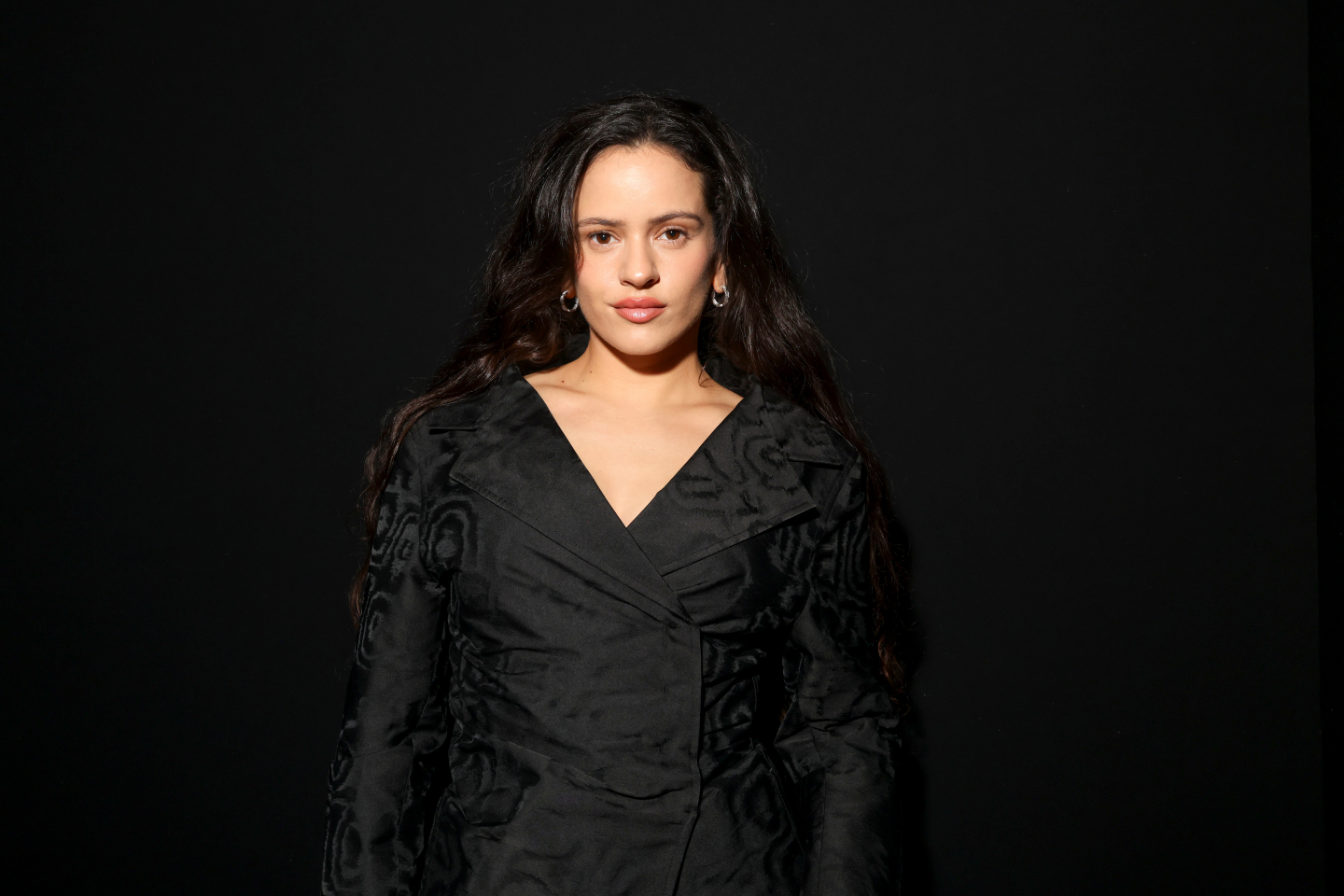
Rosalia is a young Spanish popstar, but if you’re American like me, you probably had no idea who she was until a couple months ago. To me, the new generation of Latin musicians — rappers like Bad Bunny, R&B crooners like Maluma, and sex-pot bombshells like Karol G — all converged in the rootless, over-produced cacophony of any other globalized pop. Yet Rosalia is something different entirely.
Her new album LUX, released in November, not only carries the civilizational torch of Western culture, but actually moves it forward. In both style and substance, this operatic masterpiece bridges the gap between our historical identity at a time when it’s most threatened and the modernization that’s needed if Western culture is to survive at all.
LUX is a work of Christian religious inspiration, spiritual if not doctrinal. In an October press release, the album was described as a thematic exploration of "feminine mystique, transformation, and spirituality,” with songs influenced by Rosalía's romances and her relationship with God. It is split between four movements, with 18 tracks in 14 different languages, each inspired by a different female saint. Yet Rosalia describes herself as “spiritual,” not Catholic — a frequent cop-out for philistines looking to project both humanist depth and hostility to religion — but the album shows a deep respect for and understanding of both Christian and Western artistry.
“Berghain,” the initial single released to tease the album, references the famous Berlin nightclub dubbed the “cathedral” because of its immersive and ritualistic techno experience. “Berghain” captures the religiosity of the modern world (when it exists at all), a chance to transcend the material world and self. “Berghain,” however, captures this same experience in a far more traditional sense. The track is momentously Baroque: rapid-fire string sequences evoke Vivaldi’s The Four Seasons, Rosalia’s aria-like solo verses showcase the virtuoso agility of soprano coloratura, and the dramatic choral entrances could fill a cathedral much like Handel’s Messiah.
The chorus, sung in German, captures the spirit of the track:
His fear is my fear
His rage is my rage
His love is my love
His blood is my blood
At first, this sounds quite obviously religious — “His” referencing the image of God reflected in us all. It is to a degree, with the recognition that “the only way I will be saved is through divine intervention.” But “saved” from what, exactly?
Rosalia is not talking about her eternal soul or any decidedly Christian notion of salvation. Rather, she told the Guardian that the song is about “dissolving to accommodate a lover’s fear and anger,” which becomes explicit in the outro: “I’ll f–k you ‘til you love me,” repeated in an almost trance-like spoken word. This makes it a deeply sexual track, consistent with the rest of the album. Still, the stylistic choices make it inescapably religious: musically evoking the textures and tones historically used to exalt God, while describing a love so deep it can only be expressed in spiritual terms, the blending of “His” and “his.” The vulnerability, desire, and shared pain of this love is so overwhelming that she has quite literally lost herself in the fusion with another soul.
This intense style and spirituality continues in each track: blending romance and religion, lust and love, modernity and tradition, connected transcendence and individual reflection. “Divinize” explores similar themes to “Berghain” — “I know that I was made to divinize . . . pray on my spine, it’s a rosary” — over a string-heavy dance beat. “Mio Christo Piange Diamanti” (My Christ Cries Diamonds) is the most explicitly operatic, with impressive soprano range and sweeping piano arpeggios that sound as though they were transcribed by Liszt. Rosalia elevates a troubled lover to a Christlike figure, whose tears are sacred in both the earthly and divine realms.
Does this make it sacrilegious? In a strict sense, probably — although the Vatican did praise the album. “When a creator like Rosalía speaks of spirituality, it means that she captures a profound need in contemporary culture to approach spirituality, to cultivate an inner life,” the Vatican’s culture minister explained.
It’s this inner life that’s missing in our modern age of faux-spirituality, which encompasses everything from political narcissism to obsessive therapeutics and commoditized “lifestyle” and “wellness” regimes. People are drawn to these false salvations precisely because the world today is so unspiritual. Yet they wind up simply ruminating on material concerns rather than reflecting inwardly or connecting outwardly; fully “liberated,” the self doesn’t thrive, but crumbles. It’s part of the reason culture today feels so threatened and unstable; we have lost much of our self-conception beyond the lowest, individual level.
The conservative impulse is to say we must return to an old religiosity — but it’s just as unlikely the West will return to the culture of the 1950s as it will to that of the Baroque 1650s. Culture will continue to move forward, but we can still choose a proper direction. A true and comprehensive spirituality is perhaps the best we can hope for, for the sake of both cultural and individual salvation (however one chooses to define it). And in that light, the modern spirituality of LUX, which preserves the art, aesthetics, and deep inner life that the Christian West has produced, is a triumph not just musically, but for Western civilization itself.
Gage Klipper is a writer based in New York. Previously, he was the culture critic at the Daily Caller and an editor at Pirate Wires
