



History Still Matters, and So Does David McCullough
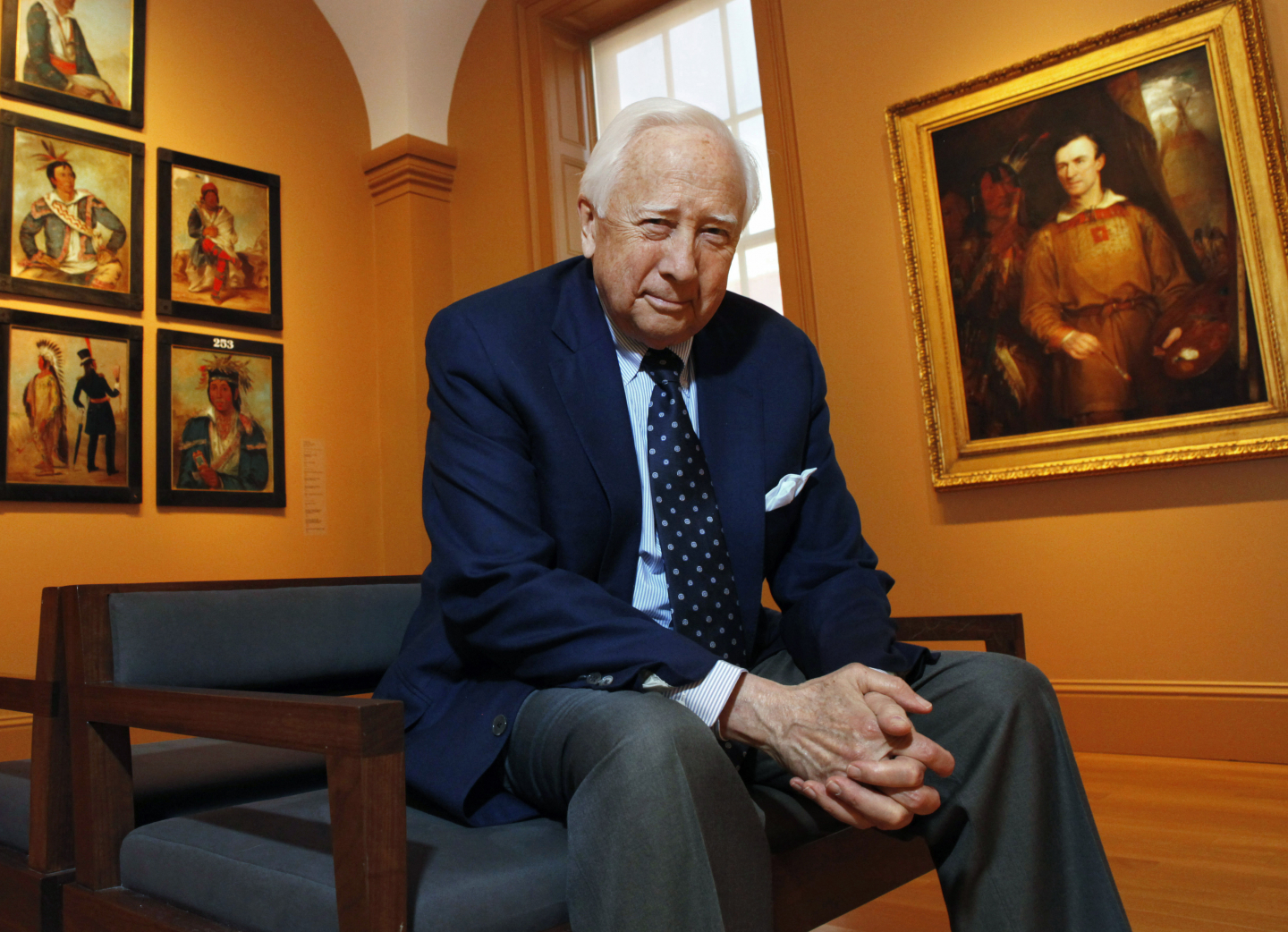
Author and historian David McCullough left a massive void behind in his absence when he died in 2022. Fortunately, many close to him agreed that his wisdom and insights were still needed today. In September, Simon & Schuster published History Matters, a posthumous book that consisted of a collection of McCullough’s speeches, essays, interviews, and lists — some of which were previously unreleased. It was compiled by his daughter, Dorie McCullough Lawson, and his research partner, Michael Hill.
It’s difficult to overstate the impact that David McCullough had throughout his life. Many of the pivotal stories and figures that come to mind as we reflect on the trials and triumphs of our past only occupy such significant space in part due to the effort McCullough made in bringing them to life for the average American. John Adams and Harry Truman were both overlooked and underappreciated Presidents, each sandwiched between two historical titans. McCullough made us all give them a second look with forceful effectiveness. Most focus on the activities of the Second Continental Congress in 1776, but McCullough knew there was another story that year in need of elevation — the story of Washington’s army, which made independence count for something.
Then there was The Pioneers, the largely forgotten story of the band of settlers who established a free society in the vast northwest territory at the dawn of the republic. This work of McCullough was particularly noteworthy to me, having grown up in southeastern Ohio, not terribly far from where those pioneers settled. This story specifically provided a rich source of inspiration as I embarked on my own biography of the abolitionist Rev. John Rankin.
History Matters is McCullough at his best. It serves as a much-needed epilogue to his life and work. In less than 200 pages, Lawson and Hill use McCullough’s prior works to give us a close look at the insights of a man who understood the critical importance of storytelling for the preservation of American history.
In a few speeches selected for the book, McCullough reminds us that history “can be, should be at its best, literature, and thus, art.”
As a painter and English major, who originally sought out to become a novelist, McCullough believed that there should be no distinction between history and art, and that this was actually necessary if history was to achieve its ends. In 1999, McCullough quoted his friend and mentor Paul Horgan in a tribute speech to Horgan in Washington, DC. “Historical writing which is not literature is subject to oblivion.” He believed that in his core, and that belief shined through in his work.
McCullough was right. History isn’t just a list of names, dates, and events. It’s made up of people living in the context of their times as we do in ours. “No one ever lived in the past,” he said in a speech at Dartmouth in 2012. “They were living in the present, their present, much like we do. History is human, let us remember. ‘When in the course of human events…’ The key word there is human.”
Humans make mistakes, often large ones. But McCullough found a sense of comfort in that fact. In spite of all the errors made by ancestry, America has prevailed as a far more perfect union than it was when it was founded. He was under no illusions of a flawless past. Yet he also held an immense amount of respect for those flawed individuals who blazed the trails that we walk today.
We live in an age where academia and culture alike are quick to cast judgement on the men and women of past generations for not adhering to modern standards of ethics and morality. McCullough rejected this sense of superiority outright. In 1995, as he accepted an award from the National Book Foundation, he told a captive audience that “everything we have… exists because somebody went before us and did the hard work, provided the creative energy, provided the money, provided the belief. Do we disregard that?”
This, of course, is not to say that our past heroes and leaders shouldn’t be held to any standard. Character was of the utmost importance to McCullough. Few others exemplified such character as the man he considered to be the greatest American — George Washington.
In a 1999 talk at the Library of Congress entitled “A Conversation About George,” McCullough stressed how vital Washington’s character was to the survival of the American project. “To be indifferent about George Washington is to miss the point about who you are, who we are, and how we got to be where we are. We are all in his debt… Washington, in almost everything he did, set the example. He was the example. He was truly indispensable.”
That example of character is what has gotten us through wars, panics, and political turmoil in the past, and it was McCullough’s belief that if we continue to embrace it, we’ll make it through the challenges of the future as well.
David McCullough loved this country, flaws and missteps included. “History is—or should be— the bedrock of patriotism, not the chest-pounding kind of patriotism but the real thing, love of country.” As a young man, he was greatly influenced by President John F. Kennedy. “Ask not what your country can do for you,” Kennedy famously declared in his inaugural address in 1961. Rather, “ask what you can do for your country.” McCullough answered this charge the best way he knew how—to write stories.
History Matters serves as a punctuation mark to the life and works of David McCullough. It’s a wonderful look into the mind of a true American original. In his pursuit of saving our stories from oblivion, he secured his own place in history as one of the greatest American storytellers. McCullough understood that history can only survive if it lives in the consciousness of the people. Without that human element that he so often emphasized, these stories will fade from memory. If they fade, this great experiment in republicanism is endangered. History doesn’t just matter — it is indispensably tied to the fate of our country.
McCullough is an irreplaceable figure in history, but his mission must continue. The best way to honor his legacy is by keeping these stories alive — for ourselves and for posterity.
Caleb Franz is the Program Manager at Young Voices, a scholar with the Bluegrass Institute, and the author of The Conductor: The Story of Rev. John Rankin, Abolitionism’s Essential Founding Father.
