




You’re Gonna Want to Take Some of That With You When You Go

David Wilbanks and I are standing in the parking lot of Robo’s Diner half-yelling over the high-pitched rattling of cars heading to and from Kentucky on U.S. Route 23. Since he first visited this place five (maybe six) years ago, David’s been making the hour-long trip from Fort Blackmore to Pound once a month with his wife and teenage daughter for hamburgers so fresh he says you can smell them as you’re pulling off the highway.
A tall man with a serious expression that might be mistaken for stern if laughter didn’t come so often and easy to him, David has a deep reverence for hard work. That’s what keeps him coming back here. “These people know work,” he tells me. “But you know, I’m kinda that way.” He shifts from one foot to the other and tilts his head a little to one side. “If I feel as good as I do right now, I don’t care if I ever retire.”
Robo’s is the kind of roadside hamburger joint that could have popped up at any time and in any place in America, but it’s here in this little coal town with its rippling tentacle roadways reaching up into hollers and around mountains and through rows of pine trees from Wise County, Virginia into Letcher County, Kentucky. Ask anybody around why that matters, and they’ll tell you it’s because — here — food matters. A generation or two ago, nothing was eaten that wasn’t earned, and earning it has become an art form all its own. These ancient mountains are Appalachian grandmothers — intractable and yet eager to give.

Mary Mullins, who calls her decision to buy Robo’s almost four years ago the “best thing she’s ever done,” will tell you that those fresh, never-frozen ingredients are the secret to Robo’s success. I ask her if she thinks the relationship people have with food here has shaped how they view the place. “In a lot of ways, yes,” she says. “I think it’s about having the fresh beef that you pat out every day. Tomatoes that you chop every day. Onions that you slice every day. People like that it tastes like home.”
The year Mary turned sixteen, she spent a summer working at the drive-in diner, taking orders and calling out the corresponding numbers to customers who passed the time reading ads pinned to the community bulletin board, or balancing themselves on concrete parking barriers, or listening to the radio in their cars with the windows cracked. It was her first job.
Like almost everything in this part of the world, this is a family affair, and tangled up in its 7 a.m. mornings and 10 p.m. nights is a chronicle of hope, fear, hard work, and genuine love.
Mary tells me more than once that – in her mind – Danny and Karen Cantrell are responsible for making this place what it is. Danny is her father’s first cousin. She grew up in the house beside his. “I didn’t want to change a thing,” she tells me, “I didn’t even want people to know it changed ownership. When people drive by on the highway and see this place, I want them to think about what it’s always been.”
When Danny bought Robo’s from J.D. Cantrell in 1977 and re-opened the restaurant in 1978, he had just been laid off from his job as a coal miner for Bethlehem Steel. He was 23 years old. He and Karen were newlyweds. “Robo’s was our honeymoon,” he says. “And it was our life together.” Forty years of success was made possible by Karen’s intelligence and Danny’s incomparable work ethic.
Like Mary, Danny is quick to credit others with the success of the enterprise. Robo’s famous chili? His mother’s recipe. Lemonade that tastes like a perfect summer’s night? That’s Nina Potter’s doing. That pretty white cole slaw? Helen Keith made that for 35 years until she met her heavenly reward.
Chef Sean Brock, a native son of these mountains and an evangelist for Appalachian food and ways, says that what strikes him when he’s standing in the parking lot of this place is grit. “You start thinking about how a burger at a place like Robo’s can be this thread that connects, this chain that links together that just keeps going,” he says. “My mom talks about going there as teenagers, and it’s crazy that it’s still there.”
Speaking of the relationship between food and culture, Sean says “it’s interesting to try and think about where it came from, what built it, what keeps it alive. Those are the things I look at as a chef. The people who made it before you are the only reason you’re able to make it now.”
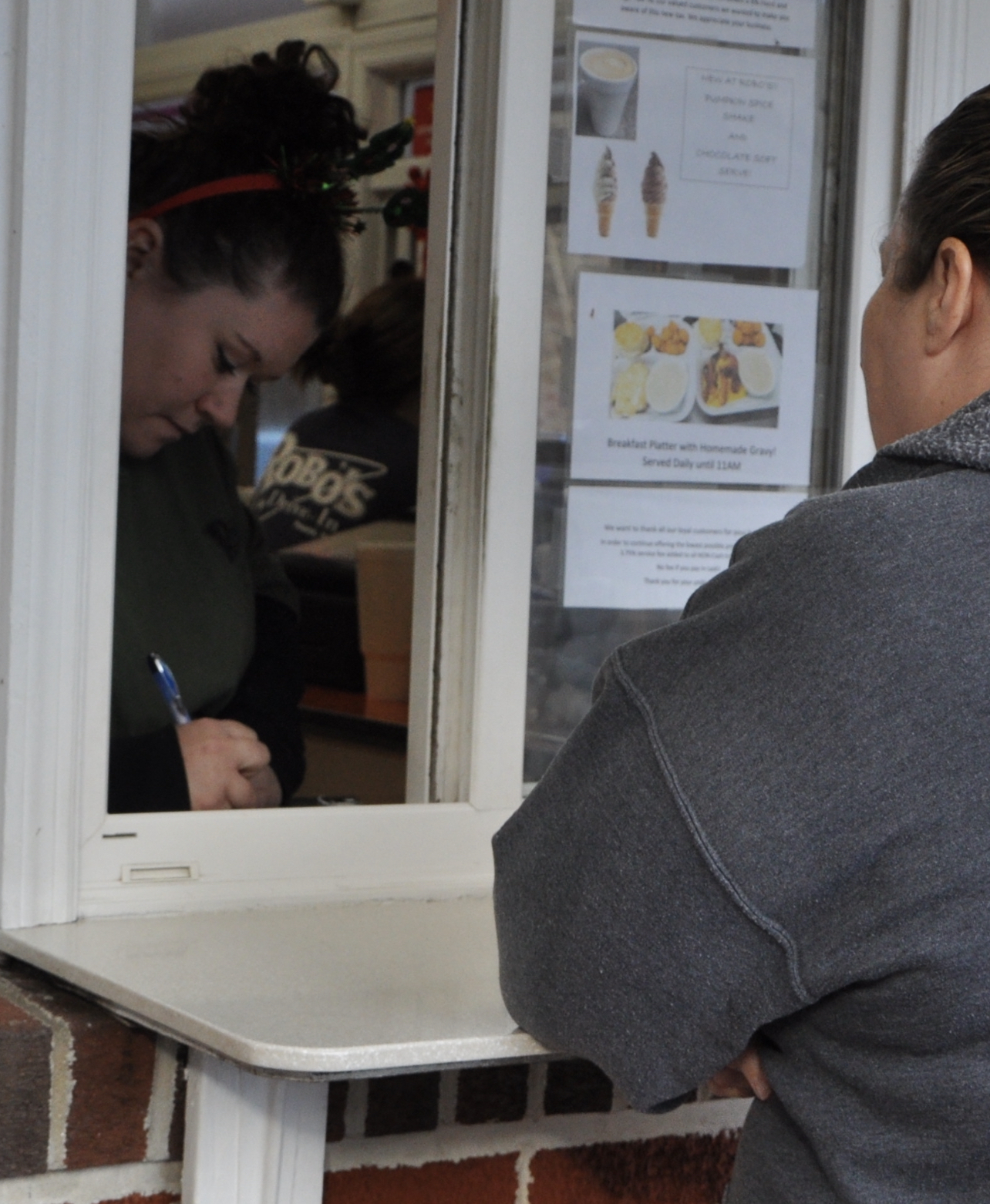
Like every mom and pop restaurant, Robo’s has overcome its share of obstacles. Staffing has never been one of them. Even in this post-COVID universe when nearly everyone is struggling to find help, Mary has a list of folks she’s ready to hire when something opens up. A pretty woman named Pam breaks in. “It’s the best place I’ve ever worked. She’s the best boss I’ve ever had.”
Danny says that in their time, Karen treated generations of mostly young women like her own daughters, helping them navigate the choppy waters of adolescence and nurturing their hopes and dreams. “Most of our kids were from this small town,” Danny says, “Hadn’t really been to very many places or met very many people. That positive experience, that meant the world to them.”
With the decline of the coal industry, Pound has faced exceptional challenges. In 2014, Wise County consolidated six schools into three, and Pound High School was shuttered and then – in the summer of 2022 – finally demolished. In the aftermath, the little town has struggled to find its footing, and – last year – the Virginia General Assembly threatened to revoke its charter. What Robo’s misses is the traffic. During parades and after football games in other parts of the county, the town is mostly quiet.
The writer Napoleon Hill who was born here and whose likeness you can find a few miles down the highway on a hillside mural wrote that “It is literally true that you can succeed best and quickest by helping others to succeed.” Every Friday, Mary says, J.W. Adams Elementary School, a couple of coal companies, and some of the other local businesses order breakfast here. That’s the spirit of this place.
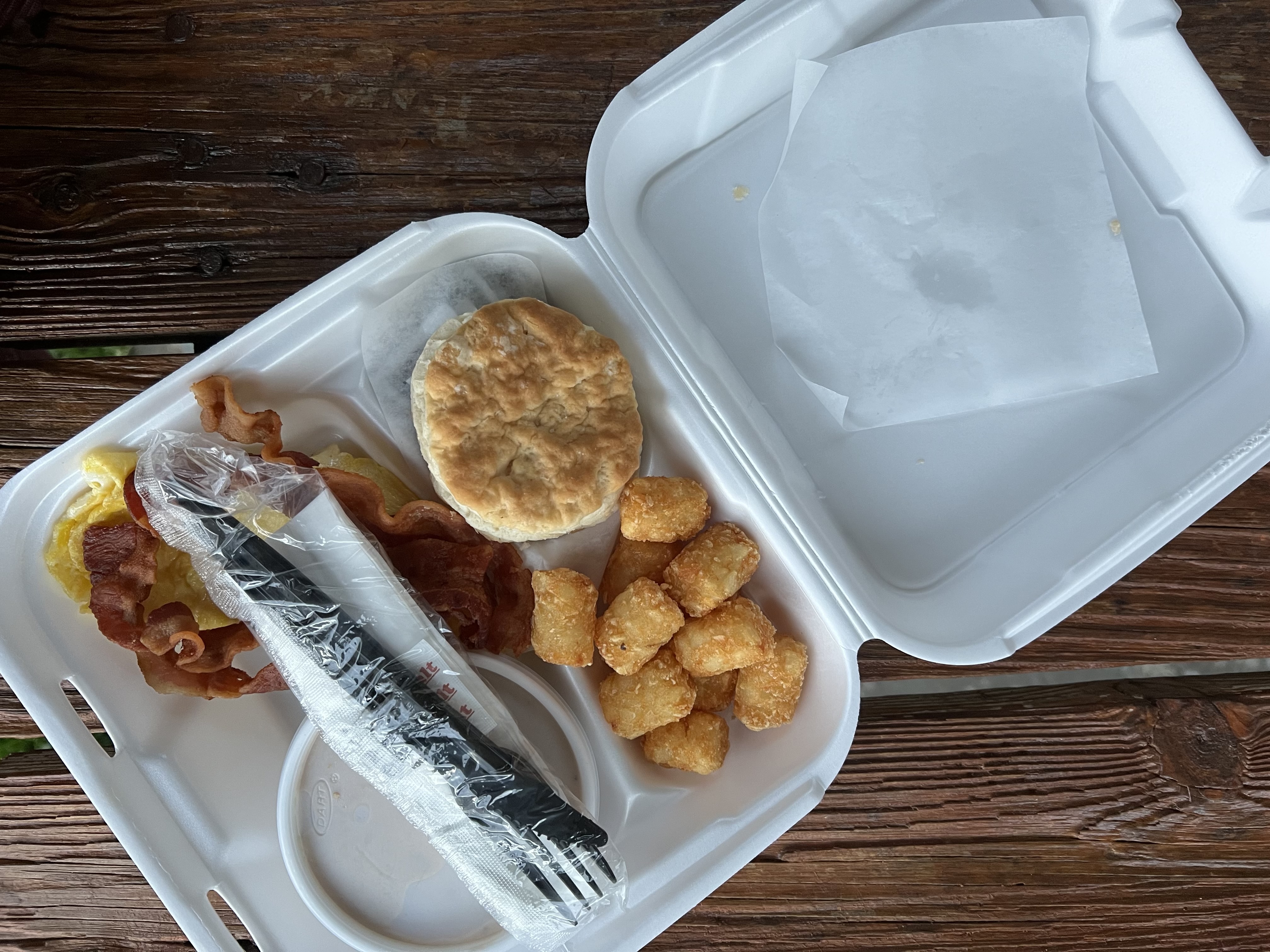
In the years since Mary took ownership of Robo’s, she has introduced one new item to the breakfast menu: homemade sausage gravy. It was her sister Amy’s idea, and the first time she made it, Mary says her eyes filled with tears. “It smelled just like mom’s gravy.”
In Sean’s mind, that’s the beauty of Robo’s. “It’s the feeling that we get, the feeling of safety,” he says. “It’s not just that you’re eating because you’re hungry. It’s a joy that’s physical.”
“You grow up as a male in Appalachia,” he says “and you’re expected to be this tough coal miner, but you put a fresh slice of cantaloupe in front of anybody, and they instantly become a child. I love that about that place. I love that food is such a central part of that.”
Robo’s busiest day of the year is the day after Christmas. Looking to reclaim something about themselves or just to remember, people raised here and visiting for the holiday skip interstate fare for something more familiar. That’s the truth of this place. You can always go home again.
Farahn Morgan is a writer and digital marketer based in central Appalachia. You can find her at longroadhome.substack.com and on Twitter at @FarahnMorgan.
