


A Conversation with Daniel J. Mahoney

Daniel J. Mahoney discussed his new book The Idol of Our Age: How the Religion of Humanity Subverts Christianity with Richard M. Reinsch II on the Liberty Law Talk podcast for Law & Liberty. What follows is a transcript of their discussion. Listen to their interview in its entirety here.
Richard M. Reinsch II: This book is The Idol of Our Age: How the Religion of Humanity Subverts Christianity. You're talking about humanitarianism in this book. However, what most people think about humanitarianism is that it's generally a good thing. You help the poor, you help those around the globe who are the victims of various disasters, wars, famines or things like that. It's about uplift and helping people, a sort of a secularized Christian ethic. Tell us what you think the humanitarian ethos is.

Daniel J. Mahoney: My book is not a critique of the Good Samaritan, or of people doing good work, or Doctors Without Borders, or anything of the sort. I think help for the poor, a philanthropic impulse, those things are not only required by the Gospel but are a fundamental part of what it means to be a human being. But humanitarianism and, specifically, the phrase “the religion of humanity” entails what the great French thinker Alain Besançon calls “a falsification of the good.” Virtue is reduced to an effort to transform the human condition on Earth and where various projects aimed at egalitarian social justice exhausts the meaning of the Good Samaritan or the Gospel’s call for us to love our neighbor. Our politics focuses more and more on a kind of vague cosmopolitanism that forgets the arduous demands of the political common good in each political community. Of course, the term “religion of humanity” goes back to the 19th century thinkers Auguste Comte and John Stuart Mill, who used it to refer to a self-conscious intellectual and moral project to eliminate God and establish a wholly atheistic humanism. I think the humanitarian ethos in the end at its deepest level and its most thought-out level entails a kind of self-deification of man and an utter valorization of the terrestrial experience of human beings. So instead of human beings being temporal and eternal, what it means to be human is reduced to the temporal sphere, and that is then reduced to an aggressive, leftist, and humanitarian ethos that isn’t satisfied with the human condition as it is, but aims at initiating a broadly utopian vision of human perfection on earth.
RR: Humanitarianism doesn't ignore the religious nature of man but it collapses it. It draws it down into a very immanent, mundane way with a worldly focus on various methods to improve life for human beings. What do you see as the negative consequences? I think if we were talking to an apostle of humanitarianism he would say we started this because the alternatives were much worse: national pride, religious aggressiveness. These lead to all sorts of violence and killing and the history of man demonstrates all this. What's the problem?
DM: G.K. Chesterton once said in reference to contempt for the nation that we don't get rid of marriage because some people abuse it, and we don't reject love because it takes pathological forms. All human goods can take pathological forms, and the task of the moral virtues and the intellectual virtues is to guide human conduct individually and collectively in a direction that maintains the integrity of common life and the integrity of the virtues. Humanitarianism is much worse than what it replaces. First, a particular political community mediates universal goods. Here, we learn to love others, to appreciate our duty, to have a sense of the political common good, etc. A vague and abstract conception of humanity not only weakens the concreteness of the virtues and of our obligations to our neighbors, our fellow countrymen, and ultimately to humanity itself, but it also can lead to a new and dangerous fanaticism where the perfection of humanity—with a capital 'H'—becomes the goal. And that goal is completely divorced from real and concrete human ends and from a sense of limits.

Auguste Comte is also the founder of the religion of humanity. He was a famous French philosopher and a social scientist in the early and middle 19th century. He initially was a proponent and theoretician of social science positivism. Comte decided that human beings are religious beings and there has to be a God, a Supreme Being. But Comte said the Supreme Being is man! So that involves, as your remark suggested, a complete immanentization of the horizon of greatness or excellence. There's nothing above man except the highest in man, and I think that my book is inspired and moved by a deep concern that many of my contemporary co-religionists, not just Roman Catholics but other Christians and believers in theistic religion, more and more conflate a Biblical religion or theistic understanding of God with a humanitarian ethos and impulse. Essentially the church becomes a NGO. Essentially the task is to ameliorate the human condition and often to do so in a very thoughtless, aggressive, and ideological way. Hence liberationism, hence certainly an indulgence for left wing tyrannies in the third world, hence a downplaying of the arduous moral virtues especially when it comes to sexual morality. I think the religion of humanity is a terrible and corrupting replacement for authentic or transcendental religion. Secondly, I see the Christian religion being subverted from within by people who are at best half humanitarians, and in many cases simply lose any real concern for the transcendental aims and goals of what the religion is.
RR: Another idea is that humanitarianism really comes out of Christianity. Leo Strauss and Eric Voegelin argue that you really can't understand this sort of emancipationist idea and the progressive improvement of man without this Christian idea of salvation to begin with. What do you say to that?
DM: Well, I think there's a good deal of truth to that. I think it's very easy for the commandment to love our neighbor to be transformed into a vague notion or hollow feeling. I remember the wonderful interview that Malcolm Muggeride, the British journalist who converted to Catholicism at the end of his life, did in 1969 with Mother Teresa of Calcutta. He asked her why she did what she did. And she said I want to do something beautiful for God. Scripture is never simply on a horizontal plane. It is and always is an elevation of the soul toward God. That doesn't mean we don't love real people and they're just instruments for the love of God. But it means that love of neighbor is never simply an end in itself. I think humanitarian is a heck of a word, humanity with a capital 'H'. The communist newspaper in Paris is called L’humanite. Think of all the terrible ideological movements of the 20th century, they were led by believers in humanity with a capital 'H'. This abstraction of a transfigured humanity was willing to do terrible things to real human beings in order to achieve the unachievable. I would say all forms of humanitarianism from the most mild progressivism of the West to full scale totalitarianism, they have no real sense of the moral fissures in the human soul. They have no sense of what I like to call the enduring, the sempiternal drama of good and evil, and the human soul that will never go away.
RR: You introduce and discuss the ideas of a number of thinkers regarding their critiques of humanitarianism. One of them, Alexander Solzhenitsyn, actually gives us a way to think about what you were just describing. Maybe it's this idea of no enemies to the left, and that sort of a well–intended, progressive humanitarianism you see in liberal democracies over the decades whose members have struggled to understand or see tyranny within communist states or socialist states. Is this an explanation for why this sort of humanitarianism makes it difficult to distinguish motives from intentions and consequences of political outcomes?
DM: I think that's exactly on the mark. There's a chapter in Solzhenitsyn’s In the First Circle, and this is a great book about the years he spent as an inmate in the scientific research prison in the Soviet gulag in the late 1940s. Chapter 54 called “Buddha’s Smile,” is about the visit of a American politician’s wife, Mrs. Kirby Eleanor Roosevelt to the prison. And she comes and she's taken in by this Potemkin village, this staged-showing of the prisoners all well-fed, no lice, haircut, old copies of the Talmud and the Bible and the Koran, and the statue of Buddha smiling in the corner, rightly so, given the fact that this is a completely staged presentation. But there was something in the character Mrs. Roosevelt, a softness of liberalism, a humanitarianism that got in the way of her appreciating the hard side of humanitarian or the totalitarian side of a certain kind of totalitarian secularism. So she saw no enemies to the left. She could only see another movement that cared for the poor, that was working for penal justice, and that was attempting to ameliorate the human condition. This has always been the problem with soft utopianism or soft humanitarianism. Reinhold Niebuhr said years ago that it always gives way to a more consistent, more materialistic, more atheistic, more violent, hard humanitarianism. Just one more thing about Solzhenitsyn, I concentrate a lot on The Red Wheel, his great cycle of books about the coming of war and revolution in Russia.
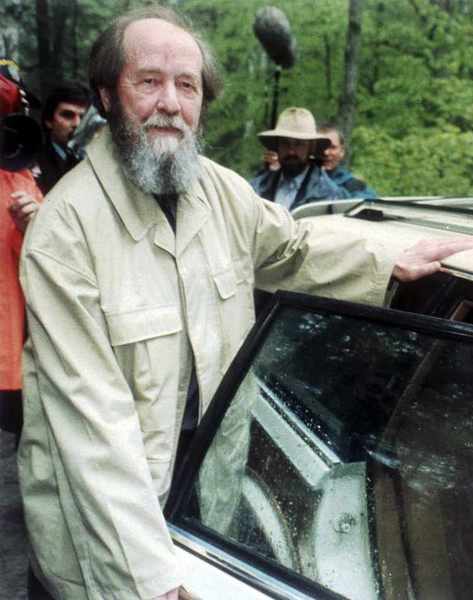
On his critique of Leo Tolstoy, Leo Tolstoy is what many humanitarians would see as a true Christian today. He was against all war, all violence, he wanted to help the poor. He wanted to get rid of the sacraments and the Cross. He wanted the effectual truth of Christianity. But Solzhenitsyn argued that given the importance of the state as an instrument for protecting and sustaining the common good, and given the reality of evil in men's souls and in certain political movements and regimes that absolute non-resistance to evil was an abandonment of our concrete obligations to charity and the common good. Solzhenitsyn thought evil had to be resisted. He criticizes Tsar Nicholas II for doing nothing to stop Revolution in 1917. He endorses what he calls an active struggle against evil that was well embodied in his multi-decade struggle against totalitarianism, so Solzhenitsyn really provides us with a different vision of the human and political consequences of Christianity that are quite opposed to humanitarianism. His predecessor, Vladimir Solovyvov, I talk about his book Three Conversations, he says there can be a good war and an evil peace. Think about that sentence today. Ninety-nine percent of the progressives in the church and ninety-nine percent or more of the humanitarians would vehemently deny it. As Pope Francis recently did in a new book called Politics and Society. He explicitly denies that there can ever be a good war and affirms that all peace is just. From Solzhenitsyn to Solovyvov's point of view, that is not the teaching of the Gospel, that is the teaching of the modern religion of humanity.

RR: Thinking about humanitarianism and politics, Pierre Manent writes the forward for this book. Manent is a great French thinker, one of our best thinkers on the nation state: What it means, why it's good, and why it should be defended. He’s a really tough critic of the European Union. He's argued in any number of books and essays that the ethos of the European Union is a humanitarianism. Your thoughts on that idea and how that shapes the way the European Union chooses to govern itself?
DM: Pierre Manent has some sympathy, he doesn't think it's likely or advisable, but he has some sympathy for an impulse that would encourage Europe to build a greater common good. A United States of Europe could think and act politically in the world, but in the end he sees an opposite process at work in the European Union. The EU has extended the field of culture and civilization, but at the same time has weakened the internal resources available to each political community and nation state. So to use a shorthand, Pierre Manent sometimes speaks about post 1968 Europe as being marked by two broad processes one of deep politicization that undermines collective virtú, that undermines the capacity to think and act politically in the world and to be meaningful actors on the world stage. The second is the de-Christianization of Europe. Europe without putting anything plausible in the place of the old nation has succeeded in weakening and encouraging, if not the withering away, at least, the loss of strength of the old nations and of course the old religion, the Christian religion of Europe. Manent’s view is Europe does have a religion, a secular religion, and a secular religion is precisely the religion of humanity. And this religion of humanity is tied to a radical and imprudent understanding of the rights of man where human rights, which are salutary within their own limited sphere, become the alpha and omega of humanity. There are no limits to rights. New ones are invented every hour. And without a political framework of law, of custom, of continuity, of tradition, this excessive valorization of rights undermines the integrity of a political community and even of the moral life.
In Manent’s last book on natural law, we suffer, in this case Europeans, but we, too, in America, ‘the tyranny of the explicit’ as ideas, projects, or choices that ought to be subject to debate and deliberation become absolute right. There is a subsequent undermining of both politics and the politics of prudence, and so natural law goes hand-in-hand with practical reason, which goes hand-in-hand with political self-government. And this religion of humanity just puts an end to all the questions including political deliberation because we know that there are no limits to ever newly discovered rights, to ever more egalitarianism, to ever more aggressively defined social justice. There are no open questions. These are the goals and they have to be applied in a unilateral, aggressive, and as absolute a way as possible.
RR: Fulfilling what Manent is saying about humanitarianism in the way it dominates the politics of Europe is the great European intellectual and man of the left, Jürgen Habermas. You also write about him in your book and his attempt to enshrine constitutionally this vision in the European Union.
DM: There are certainly worse figures in Europe today, much worse. Slavoj ?i?ek and Alain Badiou who are the defenders of the idea of communism. ?i?ek’s defense of lost causes celebrating Robespierre, Stalin, Mao, and the Cultural Revolution. Badiou does more or less the same thing. However, Habermas isn't that. He is a little soft on communism. He's very clear that Nazism was intrinsically evil and without being pro-communist he had a certain indulgence toward communism as at least being a movement on the left, and therefore committed to certain desirable goals.
But as you're alluding to he is most famous for his idea of constitutional patriotism, which is an understanding of patriotism that would denude patriotism from anything that wasn’t institutional: tradition and shared inheritances, language, and collective memory. So it's a kind of patriotism that a modern left progressive could like because it's very limiting and it tears down any authentic connection to the past, a past which Habermas, no doubt, associates with bellicosity, injustice, and inequality. In recent works, however, he has written about the need for a world community, a world sovereign. So he sees the EU as the avant-garde of humanity pointing toward a more comprehensive and complete cosmopolitanism.
It's interesting to say this is utopian, which it is, but it's also undesirable. He speaks explicitly of the religion of humanity, that's his religion. What will bind this world community together is the religion of humanity. Just one other thing about Habermas, he is one of the few proponents of the religion of humanity who knows that this idea of universal dignity of man is dialectically dependent on Christianity. It doesn't have intrinsic spiritual resources of its own.
RR: Pierre Manent has pointed to the EU having no real political criteria by which it would use to decide who should be in the Union or even who should be out of the Union. That also seems to be a consequence of the type of politics you get with humanitarian ideals dominating your know your discussion.
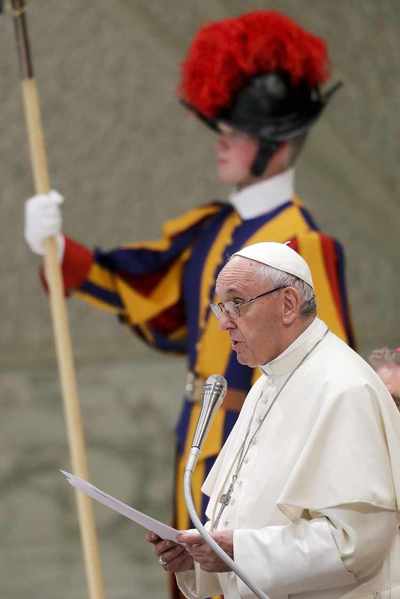
DM: Yes, absolutely. Pope Francis, who in these regards is a full fledged secular humanitarian, said in his speech to the European Parliament in 2014, We can't let people drown in the Mediterranean Sea. Manent responded: As Christians, as men of goodwill, we can't. But it doesn't mean we have an obligation to make these people citizens of our countries. And this absence of any political criteria of judgment has been seen in the influx of not mainly women and children but young men in their 20s admitted into this open zone of the European Community. In terms of safety as we saw in Cologne, Germany on New Year's Eve a couple of years ago, in terms of simply the European community, its integrity, and its demographics. And by the way, it is a meaningful question. The European community wants to pretend that it is wholly secular in its failed EU constitution. It's simply bypassed 2000 years of Christianity in Christendom. As Manent argues, whether it likes it or not it has a Christian mark, the Christian faith. It's not merely a secular field of open civilization. The so-called populists in Eastern Europe, the civilizational parties, Fidesz in Hungary and Law and Justice in Poland, they know what's at stake. They want to protect the Christian character of Europe, but people like Merkel or Macron who define Europe simply by openness and secularism have no ground to resist a radical and complete cultural and demographic transformation that would, in effect, entail the end of European civilization. Merkel's decision was not only imprudent, mindless, thoughtless, and anti-political, but it showed a sort of contempt for any idea that Europe has an interest in maintaining its soul or its integrity.
RR: The decision [by Merkel] has produced any number of political consequences throughout European countries, including the beginning of the erosion of her power. This suggests the awareness, or it forced sort of a collective thinking on the part of many Europeans: Is this the direction we want to go? And you've seen the rise of these parties in various countries, some of which do things that make us a little uncomfortable, but they're trying to recover a certain politics for their country that's been ignored.
DM: Two articles are extremely helpful. There's an article by Manent that appeared in French which was translated in English and published in American Affairs called “Populism and the Fanaticism of the Center” making the very simple point that it's the fanaticism of the centrist parties and the refusal to think seriously about immigration, borders, and Islam, etc. This has led to the rise of the populism that is sometimes undisciplined and raucous, but at the same time if the centrist parties, or the center-right and center-left, took these human and political questions seriously, then we wouldn't be dealing with the problem of populism in the way we're dealing with it. Secondly, there's a wonderful piece “Europe’s Civilizationalist Parties” by Daniel Pipes in the October edition of Commentary where he argues that responsible conservatives ought to welcome but aim to tutor the civilizational parties in Eastern Europe because they are not anti-democratic. They have clarity about the civilizational roots of Europe, including Christianity, and they show much more seriousness and realism in their thought about the illiberal tendencies of political Islam than the bien-pensant thinkers in the heart of Western Europe. I mentioned those two because there examples of some good European and American thought about what the alternative to humanitarian thought ought to be.
RR: I don't want to be self-indulgent, so I didn't start with Orestes Brownson, but we can end with Orestes Brownson. Orestes Brownson was very conversant with two thinkers you mentioned at the beginning as the arbiters of humanitarianism, Comte and Saint-Simon. Brownson knew them well, wrote about them extensively, and believed in their ideas. This is an American in the 1820s-1830s who is something of a socialist, a kind of an agrarian socialist humanitarian, who believes in this progress of man and progress of the age through science and through a secular Christian ethic. He believes all of these things. Tell us, though, why he leaves this behind?

DM: I love in his book The Convert, when he discusses his movement from a sort of liberation theology, a secular Christian ethic of progressivism, [to Catholicism]. He wrote essays in the 1830s on a new understanding of Christianity. But he always made clear this had nothing to do with the divinity of Christ. He was listening to a Reverend Parker, a progressive, a partisan of the religion of humanity, in Boston in 1842. He was literally repulsed by the argument, and he realized [Parker’s argument] had been [his] argument. There are many other things that happened: the election of 1840 and Brownson’s newfound awareness of the problems and vulgarity and potential liberalism of majoritarian democracy. He also says in various writings that his conversion to Catholicism in 1844 occurred at the same time as his reading of Aristotle's Politics. So his turn toward political moderation and sobriety went hand in hand with his conversion to the Catholic Church.
But I think Brownson is so important and so important for my book because he not only limned or sketched a deeply serious and persuasive critique of the religion of humanity, but he had been a ideologist of the religion of humanity for 13 years or so. He lived through it, and worked through it, and repudiated it. Then he turned to look at Catholicism that in the clearest and most emphatic way defended the sovereignty of God as the precondition for human liberty. He argued in his approach to the Declaration of Independence that it's precisely because we don't own ourselves that we don't have the right to own anyone else. In other words, he saw what was at stake if human beings own themselves and there are no limits on our freedom, then that's an invitation to unlimited despotism.
RR: The common trope of our age is the more religious one becomes the more dangerous one becomes, politically. Yet, with Brownson, it’s the exact opposite. It's through a discovery of Christianity in Catholicism that he actually begins to understand what Republican constitutionalism really is, why it's good, why it should be defended, and why those who claim to be its biggest defenders maybe unintentionally its biggest enemies.
DM: He was a critic, as he put it in 1873 essay of “The Democratic Principle” and by that he did not mean self-government or human freedom. He meant the valorization of the human will, that there were no limits on either majority will or human willfulness. He was an adamant critic of that. But I should also add, and you bring this out very nicely in your selections in Seeking the Truth that he was a critic of the obscurantists in the church, the people who did not believe in religious liberty. So he was a friend of human liberty. But he was a friend of human liberty who also saw that radical socialism and radical humanitarianism were new threats to the integrity of republican government, just as a certain kind of obscurantism in theocracy were such a threat.
RR: His descriptions of the abolitionists, which he refers to as the humanitarians in the American Republic, he not only sees their claims against slavery, and he sees their claims against slavery as things they are willing to pursue in unconstitutional ways, which he thinks is very dangerous. And he fears after the end of the Civil War that there will be no sort of limits on what they're able to achieve. I think you can also see his critique of abolitionists play out amongst progressives in a way.
DM: And I think it's very easy for a certain kind of reader to open Brownson and be embarrassed. But he was against slavery, but he didn't like the radical Republicans and the abolitionists and he saw a certain fanaticism and liberalism in their writings and activism. But he was right. By the way Lincoln, whom Brownson could be ambiguous about, but Lincoln, too, was never an abolitionist because he saw that they were willing to jettison certain goods: rule of law and constitutionalism, in order to achieve their end and achieve it in ways that may have undermined republican government or political moderation. So I think that's a good example of Brownson’s moderation, and that he saw a fanatic lurking beneath the surface of the religion of humanity.
RR: It's interesting as well, Brownson saw the Civil War in terms of Union and holding the country together because it was a nation. It was a political entity that could not be dissolved just on the basis of property right interests. Brownson sees this very politically and in the best sense of that term. He met with Abraham Lincoln in the White House. He urged upon him the need for the Emancipation Proclamation well in advance of when it was actually issued, and Brownson stated it in very political terms that it would help undermine the South and you should do this now. That to me is always very telling about how he approached politics, and how he thought about the Constitution.
DM: I think that's right and he could be a man who could reason politically and sometimes he seems to be criticizing Lincoln for the slowness in which the slaves were emancipated.
But look at the contemporary Church, all the talk is about a world governing authority and a critique of nationalism and identification of the common good in a very humanitarian way with globalism. Brownson really saw the nation as the home of the common good. And that in no way undermined an appreciation of the moral law, the natural law which is obligatory on all human beings. We have all these debates, you're part of them, I'm part of them, about how loyal Catholics ought to be to the United States. Is the United States still morally estimable? I think Brownson is still our best guide, and probably along with Tocqueville, in showing us that the great project is to keep together the spirit of liberty and the spirit of religion. It not only remains a great imperative but it's really the only imperative. Otherwise, we succumb to an irresponsible withdrawal from society, or an open contempt for a regime of self-government, which is still open to change and amelioration and improvement by committed Christians and committed men of goodwill who don't identify liberty with the endless unfolding of moral nihilism.
Richard M. Reinsch II is the editor of Law & Liberty and the host of Liberty Law Talk. He is the editor of Seeking the Truth: An Orestes Brownson Anthology (CUA Press, 2016). He is coauthor, with Peter Augustine Lawler, of the forthcoming volume, A Constitution in Full: Recovering the Unwritten Foundation of American Liberty. (University Press of Kansas, May 2019).
