



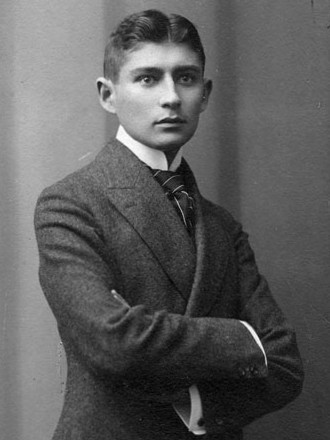
In a diary entry from February 1922, Franz Kafka writes of a deal he made with madness:
There is a certain failing, a lack in me, that is clear and distinct enough but difficult to describe: it is a compound of timidity, reserve, talkativeness, and half-heartedness; by this I intend to characterize something specific, a group of failings that under a certain aspect constitute one single clearly defined failing (which has nothing to do with such grave vices as mendacity, vanity, etc.). This failing keeps me from going mad, but also from making any headway. Because it keeps me from going mad, I cultivate it; out of fear of madness I sacrifice whatever headway I might make and shall certainly be the loser in the bargain, for no bargains are possible at this level.
The Kafkian protagonist (including the “I” of Kafka’s letters and diaries) is a loser who cannot make “any headway,” a schlemiel who secretly cultivates failure as the means of his persistence.
Read Full Article »