



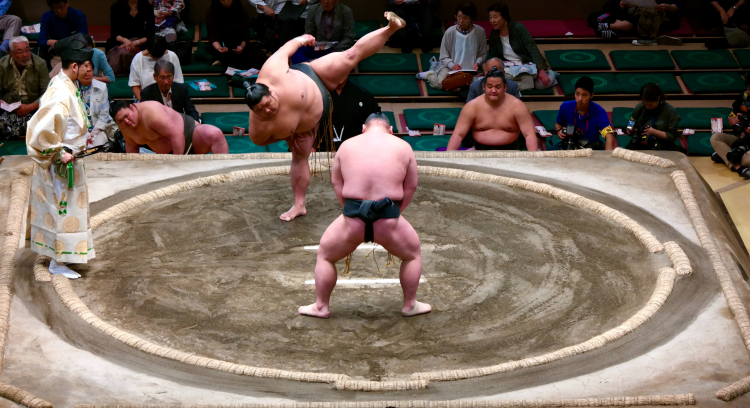
On a hot day last June, near the shores of Lake Suwa, in the mountains of central Japan, hundreds of spectators gathered around an earthen stage roughly two feet high and two dozen feet wide. The spectacularly old among them sat in folding chairs beside the shaded stage, while the merely elderly stood just behind. A bit farther back, beneath a canopy that shielded them only partly from the blazing sun, those too young to retire stood shoulder to shoulder. Regardless of their vantage point, everyone present was fixated on the dohyo, the sand-covered ring atop the stage, where a pair of sumo wrestlers dressed in loincloths prepared to do battle.
Read Full Article »Lords of the Ring
Comment
Show comments
Hide Comments
