



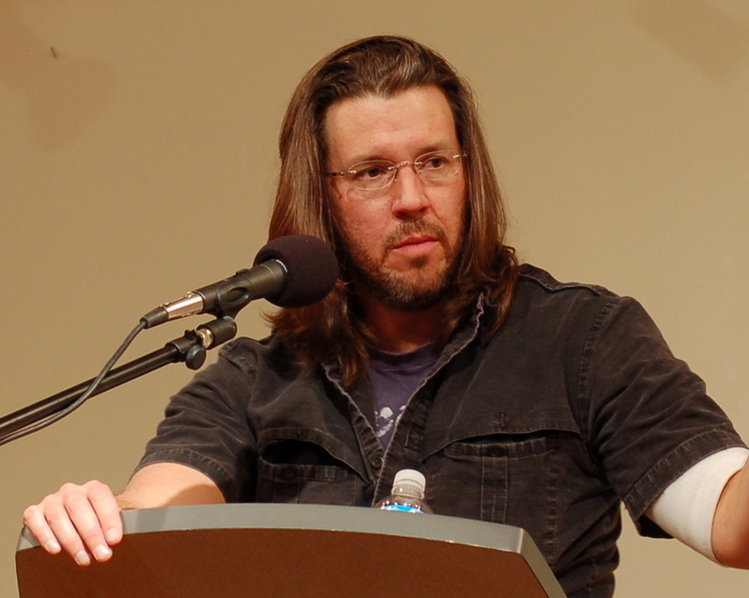
Thirty years ago this month, David Foster Wallace published Infinite Jest, a strangely tender novel despite almost seeming to troll the reader with its sheer length and procedural tedium. Today, amid a wave of ’90s nostalgia—Princess Diana, Clueless, MTV—the story feels prescient. Young people on TikTok in bucket hats and cargo pants seem to understand the ’90s as a turning point when postmodern life became ambient: when media saturation, corporate speech, managerial logic, and information overload stopped being novelties and became background noise. It was the decade that began to give meaning to what Fredric Jameson called “hyperspace”—environments so vast, optimized, and systematized that individual subjects can no longer intuitively locate themselves within them. Think edge city office parks, big-box power centers, freeway-linked subdivisions, and cities that behave less like cities and more like networks of circulation. These places are closer in spirit to shipping container warehouses and logistics corridors than to traditional urban centers with their quirky pockets and ethnic enclaves. Such spaces erode human dignity and chip away at a sense of rootedness and ancestral continuity.
Read Full Article »‘Infinite Jest’ Endures After Thirty Years
Comment
Show comments
Hide Comments
