



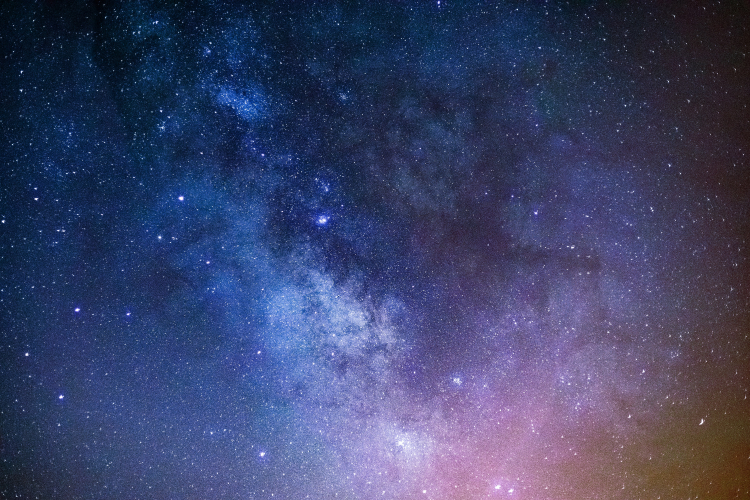
CLOUDLESS NIGHT. WAN CRESCENT. The stars are ascendant, glaring, their light blue and lacteal. Imagine we could behold the heavens in their perfection, as they were perceived before the Enlightenment. Our world is a white-blue iris encased within the celestial spheres, each nested within another, filled with a substance philosophers call “quintessence” or “aether.” The spheres, Aristotle’s invention, maintain the immutability of the firmament, its contradistinction to the sublunar region, our mortal plane, where everything blooms and molders. The starry roost of the gods is unmoving and timeless. The motion of its fixed jewels is only apparent, an artifact of the spheres that contain them and wheel about us to a primordial command.
November, 1572 A.D. We see the impossible: a star among the vertices of Cassiopeia begins blazing like a pyre. Its radiance matches that of gleaming Venus. A “new star” we call it, though centuries later we’ll learn the event indicates a stellar death. If we are to believe our eyes, we have learned that the heavens are not changeless. The ancient meanings drawn between the stars hung above our terrestrial cradle like a spectral mobile, and by this light it fell to the ground. Look again. The stars are the same, but different: burning, spinning, bulging, moving, failing, like everything beneath the moon. Now we grasp the total dominion of nature. The matter cremated in those distant suns is the same flesh sloughing off our bones.
Read Full Article »