



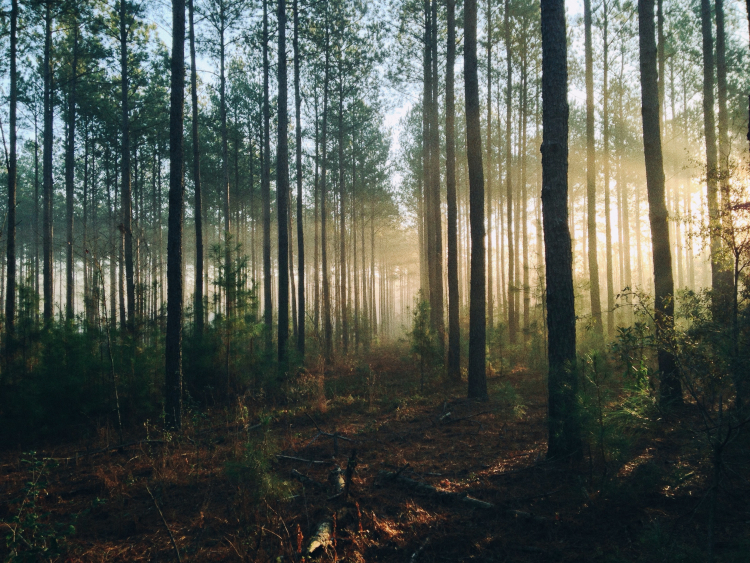
It's a ready-made insight to suggest a story’s landscape acts as one of its characters. Tap on the walls of a platitude to test its flimsiness: What does landscape-as-character mean, really? That the ocean is willful? That the forest is more than just a bucolic, fog-cloaked backdrop for human drama? Like so much writing on the environment, it’s vague—a little sweet, broadly interpretable, and it reveals how wide the gulf is between human language and the unwitting frogs in unwitting ponds we make its subject.
With this gulf in mind, Tom Comitta wrote The Nature Book, what they calls a literary supercut: a novel composed entirely of lines culled from classic works of fiction that describe the natural world. Some novelists who are now thought of as eco-conscious, like Margaret Atwood and Kim Stanley Robinson, make appearances. But for the most part, Comitta draws from works that don’t appear to belong in this category—David Foster Wallace’s Infinite Jest, James Joyce’s Finnegan’s Wake, Toni Morrison’s Beloved—with the intention of aggregating not only artistic understandings but also misunderstandings, negligence, and purplish, self-interested riffs on what’s not human.
Read Full Article »