


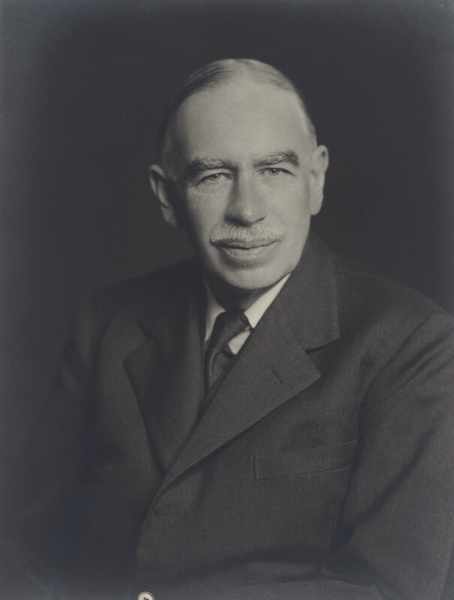
Robert Skidelsky isn't coy. He titles his new book Money and Government because these two elements “are the stars of the economic drama.” This axiom is central to the theories of John Maynard Keynes (1883–1946), the British economist whose followers guided 20th-century economic thought and practice in the United States, United Kingdom, and other developed nations. The Keynesian argument for income redistribution and deficit spending emphasizes their macroeconomic benefits: because people of modest means devote the highest proportion of their incomes to consumption, any government serious about rapid economic growth must act to get money into their hands. Conversely, Keynesianism cannot abide such monetary arrangements as the gold standard, which inhibit governmental plans for fiscal expansion.
Money and Government makes an argument by way of telling a story. Skidelsky, also a British economist whose works include the three-volume biography John Maynard Keynes (1983–2000), thinks that the Anglosphere was managing its economies most successfully in the years following World War II, when Keynesianism was intellectually preeminent. With the rise of Margaret Thatcher and Ronald Reagan in the 1970s, however, came a “neo-liberal” counterrevolution that pushed Keynesianism aside.
Read Full Article »