


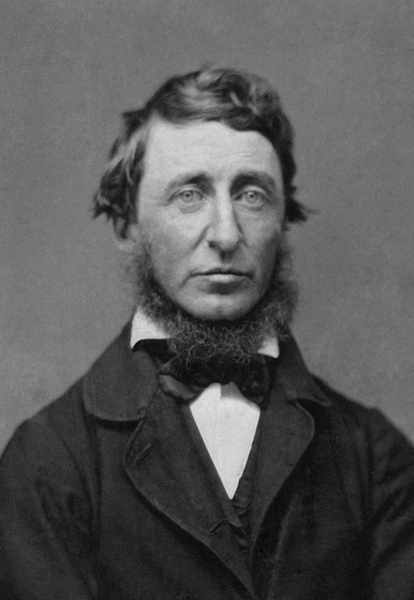
IMAGINE: YOU'VE SPENT your entire life as a struggling writer — a poet of no account, whose first book of prose sold so poorly that your publisher forced you to buy back the unsold stock, whose second book received warm and plentiful reviews but took five years to sell out its first print run of 2,000, whose career looked like it was finally starting to take off as you rounded 40, only to be cut short by your death at 44 — imagine you've struggled your whole life to leave a perfect mark, and, at your funeral, your eulogist, arguably the most famous author in America, spends the first half of his 7,500-word speech lamenting your lack of ambition, your personal coldness, the disappointment you brought to friends and family. “[I]nstead of engineering for all America,” he would tell all those assembled, “he was the captain of a huckleberry party.” Would you call that person “friend”?
Those final words that Ralph Waldo Emerson spoke of his former protégé Henry David Thoreau have stunned audiences for over 150 years, and have largely fixed the story posterity has told of their relationship. That story goes something like this:
When Thoreau returned from college to his hometown of Concord, Massachusetts, there to begin his literary career, he found it already occupied. Emerson, 14 years Thoreau's senior, had taken up residence just a few years before. It was from Concord that Emerson had launched “Nature” (1836), the founding work of American transcendentalism, and his career. By the time Thoreau unpacked his bags in 1837, Emerson was already a celebrity.
Read Full Article »