


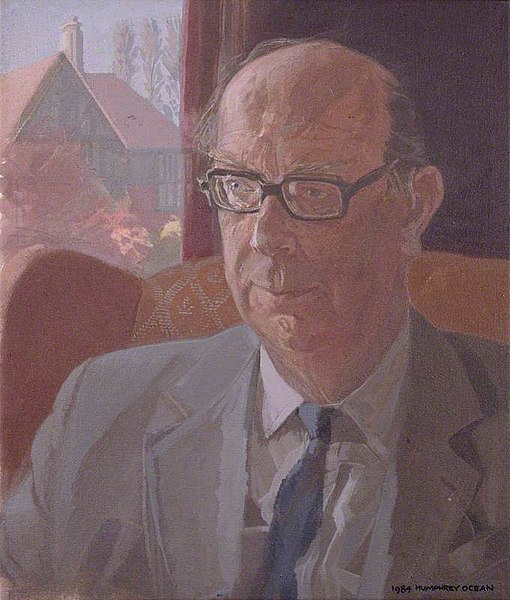
hilip Larkin published four slim volumes of poetry in his short life. Three of these are mature masterpieces, each page—and very few of the poems are more than a page—a marvel of craft and invention. Kingsley Amis was said by his son to read two or three Larkin poems every evening. They reward such devotion. They are marvels of compression that open outwards like nothing so much as a Chekhov miniature. Larkin was a librarian, never a professional poet. He didn't teach. He didn't take fellowships or serve as a writer-in-residence. He didn't join the global cultural tours that fill the late chapters of biographies of poets like Stephen Spender or Ted Hughes. He wasn't fond of public readings or running up to London for book parties. But if in his life he had little to do with the literary world, since his death in 1985 it has had much to do with him. There have been two versions of his Collected Poems and a vast Complete Poems, which added 640 pages of unpublished work, notes, and variations to the ninety-odd pages of poetry that Larkin published in his lifetime. There have also been two volumes of juvenilia, three biographies, and three thick volumes of correspondence. The Library of Congress lists forty-five volumes under the heading “Larkin, Philip—Criticism and interpretation,” all of it heavy artillery in the Larkin wars.
The issue of whether Larkin was naughty or nice has occupied critics and scholars on both sides of the Atlantic since the publication of the Selected Letters, edited by Anthony Thwaite, in 1992, and the official life, written by Andrew Motion, the following year. The violence of the viewpoints is extreme. And there is plenty of evidence for Larkin as misogynist or racist. There is also good evidence for him as kind colleague and doting lover. It is all utterly irrelevant. I almost typed depressing. The latter is the better word. Poetry is older than civilization, yet in the last fifty years, it has all but died out. Only a tiny number of poets have added anything to the public conversation during this period. Among them Larkin is pre-eminent. He has been dead for thirty years and to read his poems is to realize the power that poetry can wield over our memories and imaginations. Memorable poems are almost nonexistent today. But most of Larkin is memorable from the first moment. I vividly recall coming across these lines in “Self's the Man”:
He married a woman to stop her getting away
Now she's there all day,
And the money he gets for wasting his life on
work
She takes as her perk
To pay for the kiddies' clobber and the drier
And the electric fire.
That use of “clobber” still smarts when I read it.
Read Full Article »