


The historian Quinn Slobodian has written a book that is likely to upset enthusiasts of the “liberal world order.” In Globalists, he tells the story of how a small set of intellectuals in central Europe laid the foundations of institutions such as the European Union and the World Trade Organization (WTO), commonly held up today as bulwarks of liberal democracy. Slobodian reveals that these thinkers, who called themselves “neoliberals,” sought to do more than counter fascism and communism, as the conventional wisdom holds. They also wanted to suppress the power of democratic publics. Ordinary people, organized as citizens and workers, posed a grave threat to the neoliberals' supreme goal: a global economy integrated by the flow of capital.
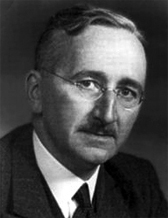
The main characters in this tale are the intellectuals who orbited the famous economists Friedrich Hayek and Ludwig von Mises in the years after World War I. Slobodian dubs this group “the Geneva School” because, between the world wars, they gathered in the Swiss capital in order to formulate their project. Hayek and Mises, who both hailed from Austria-Hungary, are more commonly known as the foremost exponents of “Austrian economics,” a school of thought that prizes the freedom of markets from state intervention. Slobodian shows how the two thinkers led a network of politically influential economists in Vienna but also places them in the context of a continent-wide and, eventually, transatlantic movement, incubated in Geneva's League of Nations. As the Depression struck, the league became the place where experts decided that “the world problem,” as a group of experts convened by the league put it in 1931, “should be studied on a world basis.” Hayek, Mises, and their acolytes constructed models and assembled statistics to represent the new entity called “the world economy.” By 1938, some members of the cohort began to describe themselves as neoliberals, seeing their mission as adapting liberalism so that it could survive the inhospitable environs of the twentieth century.
Read Full Article »