


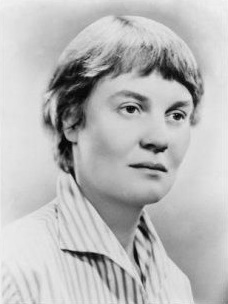
Philosophy and literature are often not very good bedfellows. For the most part, the novelist, or any artist, does not care about philosophy. It is the philosopher who often gets so completely absorbed in art that he tends to lose himself in it. This was not the case for the British-Irish novelist and philosopher Iris Murdoch. The line between philosophy and literature was as elusive as Murdoch herself, and she is among the very few to bring those two sometimes antagonistic forces together in a coherent, albeit complicated, unity.
This is one aspect of Murdoch that Gary Browning explores in Why Iris Murdoch Matters. Browning, a professor of politics at Oxford Brookes University, concisely illuminates what makes Murdoch an important contributor to both literature and philosophy and why she deserves respect and recognition. He draws from both published and previously unpublished works by Murdoch, including letters and journals, to show the various strands that connect philosophy, literature, and Murdoch's life.
Browning organizes his thoughts on Murdoch in seven thematic chapters, rather than chronologically. The chapters deal with Murdoch's metaphysics, morality, politics, and “her life and times.” While the book naturally contains a wealth of material on Murdoch's personal life, the main objective is to show her deserved standing in both philosophical and literary pantheons.
Iris Murdoch was born in 1919 in Ireland. Despite the fact that her family moved to England when she was still an infant, Murdoch always felt close to her Irish roots. She studied philosophy at Oxford where she read Plato and the Ancients, and continued her study of philosophy as a post-graduate at Cambridge. In 1948, she became a fellow at St Anne's College, Oxford, and taught philosophy there until 1963.
It is difficult to create a linear presentation of Murdoch's education because much of it has developed and flourished through her numerous friendships and love affairs. Philosophy and eros (physical and metaphysical) have always been entwined, for better or worse. Most of this is seen through her lifetime correspondence with friends and lovers. As Browning summarizes, recipients of letters from her “include, among others, Brigid Brophy, the novelist and radical thinker, Philippa Foot, the philosopher, David Morgan, a student at the RCA … Michael Oakeshott, the political philsopher, Elias Canetti, the Nobel Prize winning author, and Raymond Queneau, the experimental French novelist.” Murdoch was always unique, even in the way she read philosophy, notes Browning: “Murdoch was virtually alone among Oxford philosophers in taking Continental philosophy seriously and her thinking about the history of philosophy and its relation to the present was idiosyncratic.”
Read Full Article »